Start with the Free Training Introduction

This free introduction explains the 6-step method and shows how the full course helps adults support children through their interests, play, and prepared learning environments.
✅ Practical classroom strategies.
✅ Free training introduction.
✅ Full course includes manual and videos.
✅ Designed for immediate use.
The New Approach to
Early Childhood Education Books
Prefer to learn through the books?
Main Guidebook Series
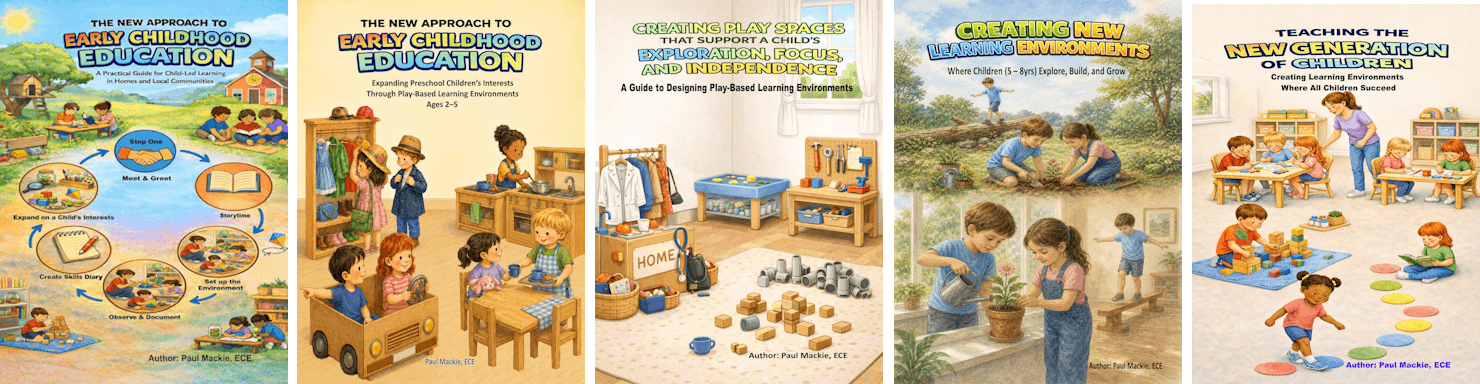
The books show how to use the same 6-step method in preschool, play-based learning spaces, early grade school, and with children who may need a different way to learn.

A Practical Guide for Child-Led Learning in Homes and Local Communities.
Begin here. This foundation book introduces the child-led, play-based method and the 6-step process used throughout the series.
Why this book matters
Many adults want children to learn without pressure, but children are often given rigid programs, fixed activities, or academic expectations too early. This book offers a gentler way to begin: by preparing the space, observing the child, and supporting learning through play.
What this book offers
Book 1 introduces the foundation of The New Approach to Early Childhood Education and the 6-step process:
Step 1: Meet & Greet the Child
Step 2: Story/Circle Time
Step 3: Set Up the Play Environment
Step 4: Observe, Document & Expand
Step 5: Child’s Skills/Interests Diary
Step 6: Expand on the Child’s Interests
Best for: Parents, caregivers, educators, grandparents, homeschoolers, and anyone beginning the child-led, play-based 6-step method.
📘 Available in Printed Softcover Book.

Book 2 builds on the foundation book by showing how child-led learning looks in preschool environments for ages 2–5. It shows how children reveal interests through play, repetition, movement, materials, and choices.
This book explains how to expand those interests through simple preschool learning environments such as building, small world play, water, sand, music, movement, art, puzzles, light, nature, sorting, and role play.
Best for: Parents, caregivers, preschool teachers, daycare educators, and anyone supporting child-led, play-based learning with children ages 2–5.
📘 Available in Printed Softcover Book.

A Guide to Designing Play-Based
Learning Environments
A Guide to Designing Play-Based
Learning Environments
Book 3 focuses on designing play-based spaces. It shows how to create intentional, flexible learning environments that support children’s exploration, focus, independence, problem-solving, and sustained engagement using simple everyday materials.
Rather than filling rooms with cluttered or overly themed setups, this book shows how to prepare spaces that invite children to explore deeply, return to play again and again, and use play materials in open-ended ways.
Best for: Parents, caregivers, educators, and anyone setting up child-led learning spaces in homes, classrooms, childcare programs, or community settings.
📘 Available in Printed Softcover Book.

BOOK 4: Creating New Learning Environments
Where Children Ages 5–8 Explore, Build, and Grow
Book 4 carries the approach into early grade school. It shows how children ages 5–8 can use play-based environments with more control, planning, recording, measuring, organizing, communication, early literacy, early writing, early math, and real-world exploration.
This book explains how learning environments can grow with older children as they build, create, investigate, record ideas, solve problems, and connect their interests to real-world experiences.
Best for: Teachers, homeschool families, caregivers, and anyone supporting child-led, play-based learning.
📘 Available in Printed Softcover Book.

BOOK 5: Teaching the New Generation of Children
Creating Learning Environments
Where All Children Succeed
Book 5 is the broader teacher-support book. It focuses on children who may not fit easily into traditional academic settings and shows how learning environments can support different strengths, interests, movement needs, communication styles, behavior signals, and ways of learning.
This book explains how adults can adjust the environment rather than forcing every child into the same path. It connects child-led learning, movement, behavior, communication, cooperation, and curriculum through play.
Best for: Teachers, educators, caregivers, and anyone supporting children who need a different approach to learning.
📘 Available in Printed Softcover Book.
The 6-Step Teaching Model Support Books
The New Approach to Early Childhood Education
A 6-Book Support Series for Preschool Teachers,
Daycare Educators, and Caregivers

This practical series supports each step of the child-led, play-based method, from welcoming children and preparing the environment to observing their play, recording interests, and expanding learning through meaningful
play-based environments.

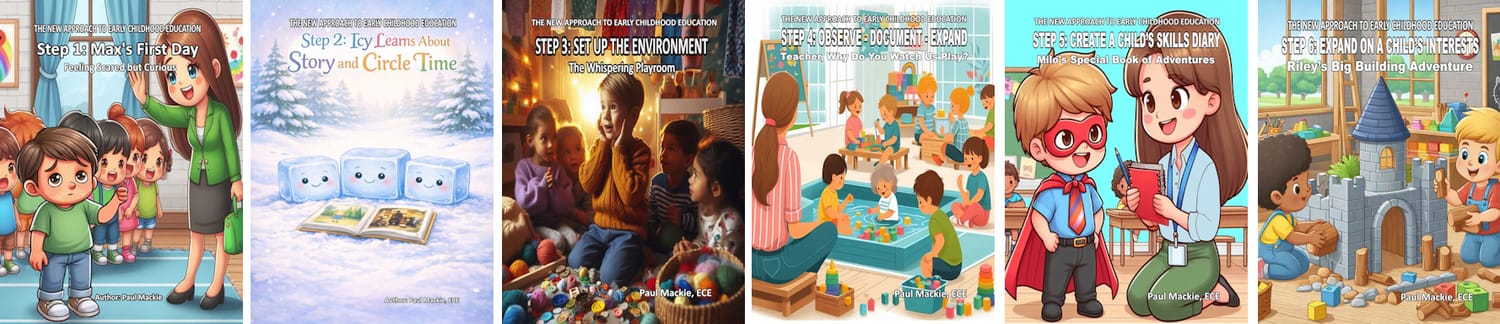
Create a welcoming start to every day by building emotional security and connection from the moment children arrive.
What this story supports
✅ Builds trust and belonging.
✅ Supports emotional regulation.
✅ Strengthens teacher-child relationships.
✅ Sets the tone for child-led learning.
📘 Available in Printed Softcover Book.

Supports Step 2: Story/Circle Time
Teaching Through Love and Compassion.
Use meaningful storytelling to model empathy, communication, and positive social interaction in everyday classroom life.
What this story supports
✅ Encourages expressive language and communication.
✅ Develops empathy and kindness.
✅ Strengthens peer relationships.
✅ Supports emotional awareness.
📘 Available in Printed Softcover Book.

Create calm, intentional play spaces using open-ended materials that invite children to explore, focus, and begin play independently.
What this story supports
✅ Encourages independent play.
✅ Reduces clutter and overwhelm.
✅ Supports problem-solving and creativity.
✅ Makes classroom management easier.
📘 Available in Printed Softcover Book.

Supports Step 4: Observe, Document & Expand
Observation helps educators notice what children are interested in, how they are learning, and what meaningful changes can expand their play.
What this story supports
✅ Identifies emerging interests.
✅ Guides intentional material selection.
✅ Supports individualized growth.
✅ Builds meaningful documentation.
📘 Available in Printed Softcover Book.

Supports Step 5: Child’s Skills/Interests Diary
A child’s skills diary helps educators turn everyday observations into a meaningful record of children’s strengths, interests, progress, and emerging learning over time.
What this story supports
✅ Tracks progress naturally.
✅ Strengthens home-school connection.
✅ Builds confidence and self-esteem.
✅ Supports smooth transitions from pre to grade school.
📘 Available in Printed Softcover Book.

Supports Step 6: Expand on a Child’s Interests
Riley’s interest in building becomes an opportunity for deeper learning as the educator adds thoughtful materials and new possibilities without taking over the play.
What this story supports
✅ Organize Loose Parts by interest.
✅ Build child-led learning environments.
✅ Match a child's interests to expanded materials.
✅ Support focus through meaningful play.
📘 Available in Printed Softcover Book.
Practical Observation & Documentation Tool

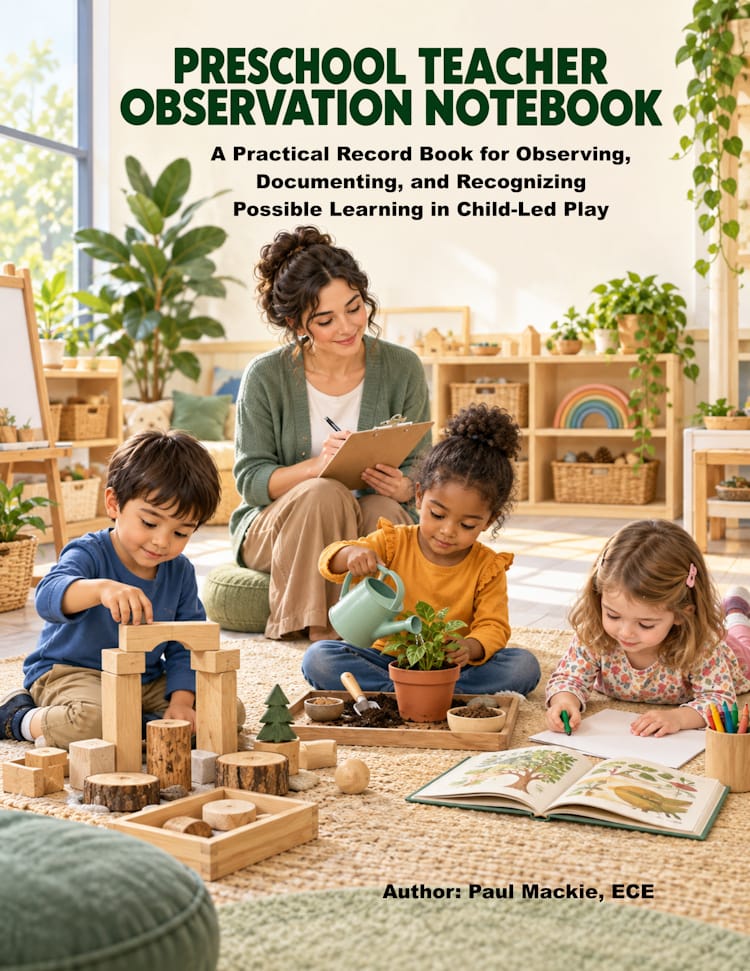
The Teacher Record Book is designed for preschool teachers and daycare educators using child-led, play-based learning. It provides a simple, organized way to record children’s observations, interests, emerging skills, and responsive changes to the learning environment.
✅ Records observations during children’s play.
✅ Helps identify interests, strengths, and emerging skills.
✅ Supports Step 4: Observe, Document & Expand.
✅ Supports Step 5: Child’s Skills/Interests Diary.
✅ Helps plan meaningful changes to the play environment.
📘 Available in Printed Softcover Book.
Companion Guide

A Practical Play-Based Guide for
Supporting Children’s Interests (Ages 3–8)
This companion guide goes deeper into recognizing and supporting a child’s individual interests. It uses a simple 3-step pattern: notice the child’s interest, offer play materials and environments, and expand the child’s play.
It includes examples of interests such as building, music, stories, movement, nature, machines, helping, role play, quiet play, art, and sensory exploration.
Best for: Parents, caregivers, educators, and anyone wanting to understand what a child is showing before choosing or adjusting the learning environment.
Storytelling and Family Learning Books

Everyone has a story to tell
teachers, parents, grandparents, and caregivers alike.
The Story Time Made Simple and Grandparent Legacy storybooks support storytelling, family connection, emotional learning, imagination, and shared play.
These books are separate from The New Approach guidebooks, but they can be used alongside story tables, loose parts, and child-led play.
© Copyright 2026 | Paul Mackie | Privacy Policy | Terms of Use